Billie Jean’s not my lover

Those of you of a certain age, may remember the musical spat in the 80s between Michael Jackson and Lydia Murdock. Jackson released ‘BillieJean’ in January 1983 apparently based on groupies’ claims against his brothers that they were the father’s of various babies from assignations that took place when they used to tour as the Jackson 5. Lydia countered with ‘Superstar’ which alledgedly attacked Jackson for his denial of paternity. Roll forward nearly 40 years (is it really!!!) and a recent disagreement brought this Jackson saga back into my mind.

Dezeen ran an article on 24th August stating that “Concrete construction “offsets around one half” of carbonate emissions from cement industry says IPCC“. As a durability specialist I spend my days designing and specifying concrete to resist carbonation as the process can lead to the corrosion of reinforcement and spalling of concrete (as my fence posts play testament to) so I’m always a bit concerned when this argument is used in favour of concrete.

The following week Dezeen ran another article “Cement and concrete “are not carbon sinks” says Cambridge materials scientist”. The Academic taking on the Lydia Murdock role said that he was frustrated by. the IPCC Report because concrete only absorbs a fraction of the total CO2 produced by cement. The IPCC put it at 50% (i.e. 1/2 – definitely a fraction). while the Cambridge academic said it was only 25% i.e. 1/4 (definitely another fraction). He argued concrete was not a carbon sink because it did not reabsorb all its carbon and instead we should be using more timber or plant based material. Cement after all is responsible for 8% of all CO2 emissions.

As I said, I have some disquiet about the argument of carbonation being good, but I vehemently disagree with the concrete being bad and wood is good mantra. Wood at best, to my mind, is a temporary store of carbon, because at the end of its life it will be burnt or rot and release all that captured carbon back into the atmosphere. Not to mention all the land that would need to be put over to tree production to even remotely get close to the sort of levels of production needed to replace the ubiquitous concrete and also forgetting the inability of timber to replace many of concrete’s applications (wooden roads anybody? Or tunnels? Or runways? Or crash barriers?). Concrete’s problem is that it is so successful. It is strong, durable, fire resistant, cheap, locally available; in short, sustainable. It’s huge emissions are due to it’s extensive use. We all by now must have heard the fact that concrete is the second most widely used material after water. So what is water’s carbon footprint? After all it needs to be captured cleaned, stored, pumped, treated etc. The River Network published a report in 2009 that said:

Through our analysis of primary and secondary research, we estimate that U.S. water-related energy use is at least 521 million MWh a year—equivalent to 13% of the nation’s electricity consumption. While this appears to be a conservative estimate of water-related energy use, our findings suggest that the carbon footprint currently associated with moving, treating and heating water in the U.S. is at least 290 million metric tons a year. The CO2 embedded in the nation’s water represents 5% of all U.S. carbon emissions and is equivalent to the emissions of over 62 coal fired power plants.

River Network

Does anybody seriously suggest we stop using water because of its huge carbon footprint? Ofcourse not. Sure, we can use less, we can find more efficient ways to treat it, heat it, transport it but we will always use it and there will probably be a large carbon cost involved. Concrete is in a similar position to water but to my mind has a more realistic chance of being carbon neutral or even becoming a carbon sink. Carbon capture technologies are being developed and if we can get them to work effectively, capture the carbon used in production, then whether the carbonation process captures 25 or 50%, concrete will become a genuine carbon sink and will be able to capture all that carbon being released by rotting and burning timber that had been naively used as the answer to climate change.
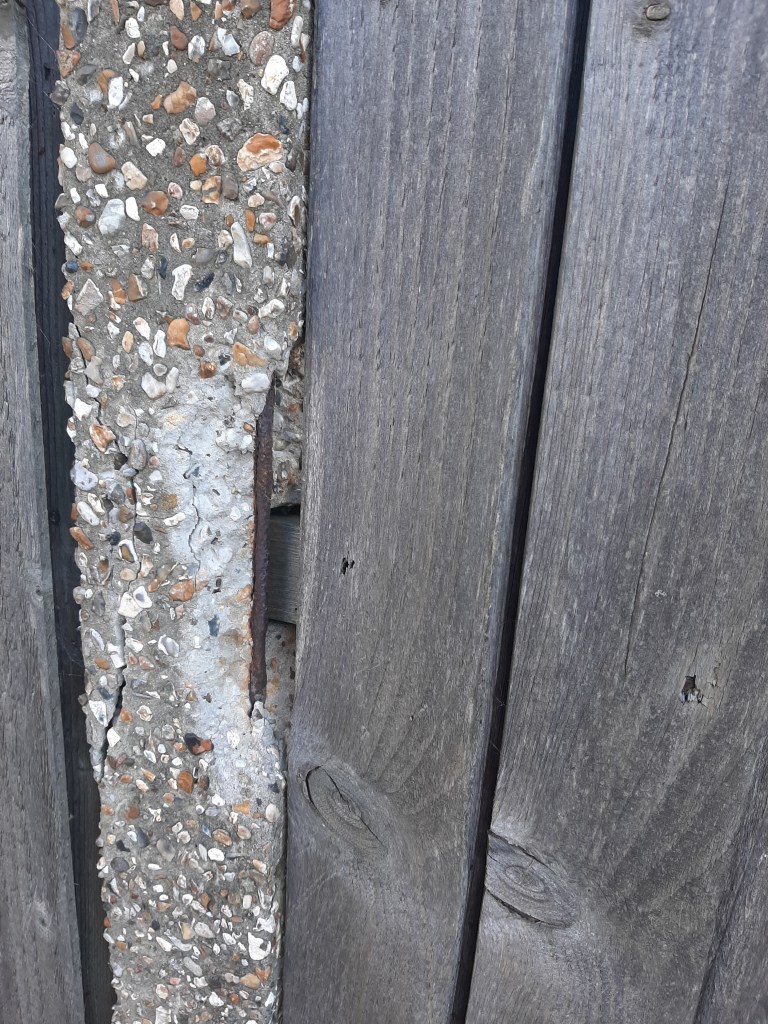
Carbon capture at work!

Wood you believe it?

Oh dear, the New Scientist is the latest publication to fall under the spell of ‘timber can save the
world’ mantra by replacing the evil that is concrete (The New Age of Wood, 16th March 2019).

The article argues that we live in the “hydrocarbon age” which makes possible the materials that ‘define our
civilisation: steel, concrete and plastic’. It goes on to claim that “everything that is made from fossil-based materials today, can be made from a tree tomorrow’. While some examples are obvious, e.g. timber buildings, others require new technologies. Apparently, a timber ‘tougher and stronger’ than
high performance steel can be made from soft wood. Obviously, it must be processed first, which involves ‘chemically removing half of the lignin then brutally compressing what is left at high temperature’. No mention is made of how much carbon is emitted in this process. I wonder what
solution they will claim can replace concrete paving or asphalt roads. Perhaps they’ll transform
timber decking into something that can survive being run over by all the articulated lorries that will
be needed to haul all that imported timber and timber products around the country. Better hope it doesn’t rain, it might get a bit slippery!

I have rehearsed the arguments about the carbon content of concrete before and how it is a victim
of its own success and talked about the disadvantages of CLT, e.g. the poor acoustic qualities that required a school to ban pupils from talking in the corridors and the peeling layers that
means it can add fuel to a fire.

Let’s consider some of the other issues that get glossed over.
Where are you going to put all these trees? Has anybody worked out how many trees would need
to be planted to replace all concrete, steel and plastic and would there be any land left over to
provide food for the world’s growing population or house them?

Apparently, one cubic metre of timber stores one tonne of CO2, which contrasts positively to
cement where one tonne of cement creates getting on for one tonne of CO2. However, concrete is a
low carbon material because not much cement is used in its production (and that cement is often partly replaced by low CO2 products like slag and fly ash). What happens at the end of life? The timber will probably be burnt to produce energy also known as releasing all that stored CO2 back into the atmosphere. So, when the New Scientist claim “switching to timber would immediately wipe a billion tonnes off global carbon emissions”, what they fail to add is that in 50-100 years time much of it will still end up in the atmosphere. Concrete by contrast, reabsorbs CO2 throughout its life by a
process of carbonation. At the end of its life, if it is crushed up to produce recycled aggregate, the
increase in surface area of the particles will accelerate the carbonation, increasing the amount of
reabsorbed CO2.

Don’t get me wrong, I’m not saying don’t use timber, or develop new technologies. What I am
saying is that concrete is a wonderfully adaptable, durable, cheap and locally available product. Let’s
look at ways to improve further the sustainability of concrete, e.g. by sequestration of CO2, rather
than trying to create a concrete-free fantasy land.

How do I sleep at night?

That was the question asked of me by a colleague, followed by a clicking sound as his tongue was extracted from his cheek, where it had been firmly planted. He had just read the Guardian article “Concrete – the most destructive material on earth”. The piece was a literary assault on the ubiquitous construction material written with such venom (even by the standard of that newspaper, which often has a very myopic view of the world) that had it been written about an individual rather than a defenceless material, libel lawyers around the land would be rubbing their hands in anticipation of the fat fees they would earn.

I must be a Carbon Criminal in the eyes of the Guardian, having spent my whole career working in different parts of the Concrete Industry. Concrete is blamed for everything from supporting corrupt governments to causing global warming or supporting organised crime. I have been toying with the idea of a blog on concrete for sometime and this article has been the catalyst I needed. It looks like the Guardian is going to have a sustained attack on concrete as they are promoting Guardian concrete week which will investigate the “shocking impact” the material has on the modern world”

It’s true that cement is an energy intensive material to produce and often bandied about is the statistic that each tonne of CEM I (aka ordinary Portland cement) generates one tonne of carbon dioxide during its production (the figure is actually less than that). But let’s not forget cement is not concrete; the two words often get mixed up and used incorrectly. The Guardian article falls into this trap when it talks about digging a hole and filling it with cement, but they are not alone.

Dan Brown got it wrong so many times in the Da Vinci Code sequel Angels and Demons that it spoilt the book for me. It was not a “huge cement bulwark thick enough to ward off attacks even by tanks”; it was concrete. And Ian MacMillan, who wrote in Neither Nowt Nor Summat, that his “Uncle Charlie and his son Little Charlie made sure they drew their initials in the cement when they built their new garage in the back garden of 34 North Street in 1963”. Uncle Charlie and his son little Charlie either wrote their initials in the concrete floor or the mortar between the bricks in the wall. They almost certainly didn’t write it in the cement (a fine grey powder that’s used to make concrete and mortar) and if they did it would have been blown away with the first gust of wind. This is simply WRONG and is equivalent to Mary Berry eulogizing about a delicate carrot flour with a scrumptious flavour on The Great British Bake Off? Flour is a powder used to make cakes; cement is a powder used to produce concrete.

The fact is that not very much cement is used in concrete, the rest of the materials (aggregate, water, admixtures and supplementary cementitious materials like ground granulated blastfurnace slag and fly ash) are typically extremely low carbon materials, so that a tonne of concrete of the type often used in foundations can have an embodied carbon dioxide content well below 100kg per tonne rather than 1000kg.

As the article points out, concrete is the second most widely consumed material in the world (after water). It can be aesthetically beautiful, it can be ugly. The fact is that without concrete our health and education would be poorer. In fact without concrete, we wouldn’t have the transport infrastructure allowing those papers to be distributed or the journalists to get to work, or the office blocks they work in, or the buildings to house the printing presses, or the shops to sell the papers in, or the electricity to run their laptops or, or, or…. (the list is endless) but in short, there would be no Guardian newspaper.

Coal, oil and gas produce more CO2 than concrete (but are used in much lower volumes), concrete has much lower CO2 content on a weight by weight basis than steel, asphalt and plasterboard. Concrete is a low carbon material and it is a victim of its own success. It is widely used because it is durable and cheap.

The article is light on suggested alternatives to concrete. Cross laminated timber is one suggestion. Obviously not suited for most of the applications that concrete is put to, it can be used for the walls of buildings. I am a governor of a school in west London, that despite my best efforts, was built in CLT. It looks attractive but there’s one big problem. The noise! CLT, unlike concrete, does not absorb noise and it was impossible to use the classrooms when there was any chatter in the corridors as pupils moved between classrooms. By necessity, the school had to implement a silence in the corridors policy.

Concrete also has inherent fire resistance unlike timber. The CLT industry has argued that you do not need to worry about fire in CLT buldings, because when they start to burn, the timber chars, effectively producing an inflammable surface on the CLT. While this may be true for solid timber, CLT is built up in layers and recent work has shown that the layers can peel providing additional fuel for the fire. In the post-Grenfell era, do we really want to promote timber housing with question marks over its safety?

Don’t get me wrong, I think the cement industry could still make giant leaps at improving the sustainability of its product. CO2 sequestration is one area to be more seriously addressed but the concrete industry is already doing a lot of good work. The UK concrete industry diverts over five million tonnes of material from external waste streams and uses them in place of primary materials. In 2014 it used 107 times more waste than it sent to landfill.

Despite the Guardian’s outpouring on concrete, to quote one of their other bête noire’s, the late Lady Thatcher,

“There is no alternative”